TL;DR:
- Precise management of the Level of Detail (LOD) is essential to adapt the 3D model to its intended use, thereby avoiding costly rework.
- 3D industrial projects include prototyping, animation, hybrid manufacturing, structural lightweighting, and digital twins, each meeting specific objectives.
Industrial 3D design is not limited to a single type of project. Depending on your sector, your objectives, and the maturity level of your process, the types of 3D industrial projects vary considerably, both technically and methodologically. Prototyping, simulation, animation, hybrid manufacturing, digital twins: each category meets specific needs and mobilizes specific tools and skills. This guide helps you see clearly to choose the right type of project according to your actual challenges.
Table of contents
- Key points
- 1. Criteria for Identifying Types of 3D Industrial Projects
- 2. Prototyping and 3D Modeling: The Foundations of Product Development
- 3. Industrial 3D Animation: Simulation and Visual Communication
- 4. Complex Projects: Lightweighting, Hybrid Manufacturing, and Digital Twins
- 5. Comparison of 3D Industrial Project Types by Sector
- My Perspective on 3D Industrial Project Trends
- Ohmycad Supports You in Your 3D Industrial Projects
- FAQ
Key points
| Point | Details |
|---|---|
| Adapting the Level of Detail | The LOD must match the use: LOD 200 for preliminary design, LOD 400-500 for the digital twin. |
| Iterative Prototyping | Integrating user feedback improves design accuracy by 45% from the earliest phases. |
| 3D Animation as a Lever | Industrial animation facilitates technical communication and training for internal and external teams. |
| Well-Documented Complex Projects | In heavy industry, dimensional compliance alone is not enough; documentation is critical. |
| Choosing by Sector | Automotive, nuclear, construction, or robotics: each field requires a distinct type of 3D project. |
1. Criteria for Identifying Types of 3D Industrial Projects
Before comparing projects, it is necessary to understand the criteria that differentiate them. These criteria structure your approach and prevent the delivery of an unusable model because it is too detailed or not detailed enough.
Here are the main axes of differentiation:
- Level of Detail (LOD): according to recommended LOD levels, an LOD 200 is suitable for preliminary design, an LOD 300 for execution, and an LOD 400 to 500 for as-built documentation or a digital twin.
- Technology Mobilized: 3D printing, parametric modeling, dynamic simulation, animation, or hybrid manufacturing.
- Final Objective: validate a concept, optimize a part, train technicians, or communicate with clients.
- Structural Complexity: simple single-block parts versus lattice architectures or multi-material assemblies.
- Target Industrial Sector: automotive, nuclear, construction, robotics, aerospace, or heavy production.
Pro tip: Define the target LOD before even starting the modeling process. Delivering an LOD 300 model for as-built use is a frequent error that necessitates reworking the entire project.
Each criterion acts as a filter. By crossing objective, sector, and technology, you precisely identify the type of project that corresponds to your situation.
2. Prototyping and 3D Modeling: The Foundations of Product Development
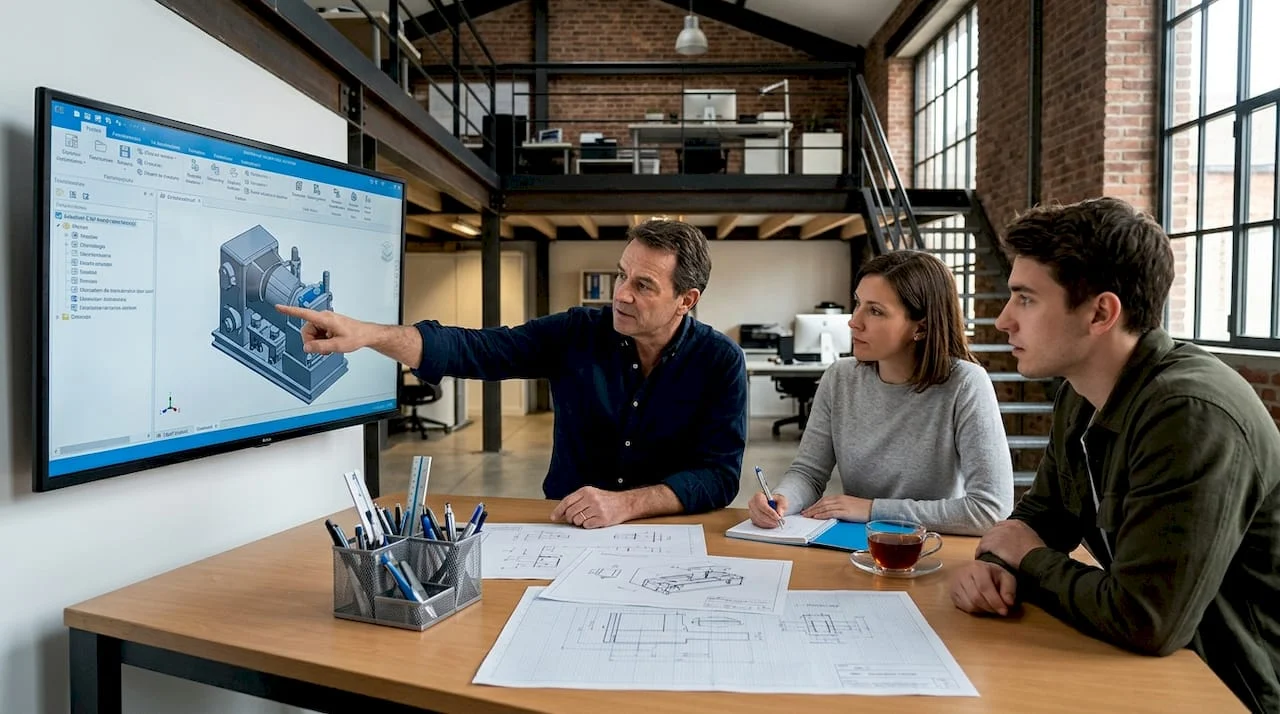
Industrial 3D prototyping is often the entry point for 3D projects in the industry. It allows for the validation of a concept before any production commitment, which considerably reduces the costs of errors.
Iterative prototyping, which involves producing several successive versions of the model by integrating feedback at each cycle, increases innovation efficiency by 60% and improves design accuracy by 45%. These figures are not anecdotal: in automotive or robotics, a design error detected during the prototyping phase costs ten to fifty times less to correct than during the manufacturing phase.
Concrete applications cover several areas:
- Ergonomic Validation: testing the handling of a tool or part before tooling.
- Early Dimensional Control: checking tolerances before ordering components.
- Internal Communication: presenting a concept to management or technical teams without a costly physical prototype.
- Rapid Iteration: modifying geometry in a few hours with efficient modeling methods rather than in several weeks.
This type of project integrates naturally into agile methods. Short revision cycles allow for the incorporation of user feedback from the earliest phases, which better aligns the final product with real market needs.
3. Industrial 3D Animation: Simulation and Visual Communication
Industrial 3D animation often occupies an underestimated place in 3D projects. It is not used solely for producing commercial videos. It allows for the simulation of complex assembly sequences, the visualization of machine operating cycles, and the training of technicians without exposing anyone to a hazardous environment.
“Industrial 3D animation popularizes complex mechanisms, simulates assembly phases, and facilitates understanding for all stakeholders.”
Concrete uses in this type of project include:
- Assembly Simulation: visualizing the assembly order of complex industrial equipment, step by step.
- Technical Training: replacing or supplementing technical manuals with animated sequences accessible on tablets.
- Commercial Communication: showing the operation of a machine to a client before manufacturing, without a physical prototype.
- Design Review: identifying geometric conflicts or accessibility issues during assembly.
In a heavy production plant, for example, animating the preventive maintenance sequence of a production line reduces intervention errors and the training time for new technicians. This type of project utilizes 3D design software such as CATIA or the 3DEXPERIENCE platform, which natively integrate kinematic simulation functions.
4. Complex Projects: Lightweighting, Hybrid Manufacturing, and Digital Twins
These are the most technically demanding 3D industrial projects. They combine several technologies and require a high level of documentary rigor.
Lattice architectures for structural lightweighting
Lattice structures (three-dimensional grids) allow for the optimization of mechanical strength while drastically reducing mass. In construction, certain lightweight concrete elements achieve a concrete reduction of up to 60% thanks to these numerically calculated architectures. In automotive and aerospace, the same principles apply to 3D-printed metal parts.
Hybrid Manufacturing: 3D Printing and CNC Machining
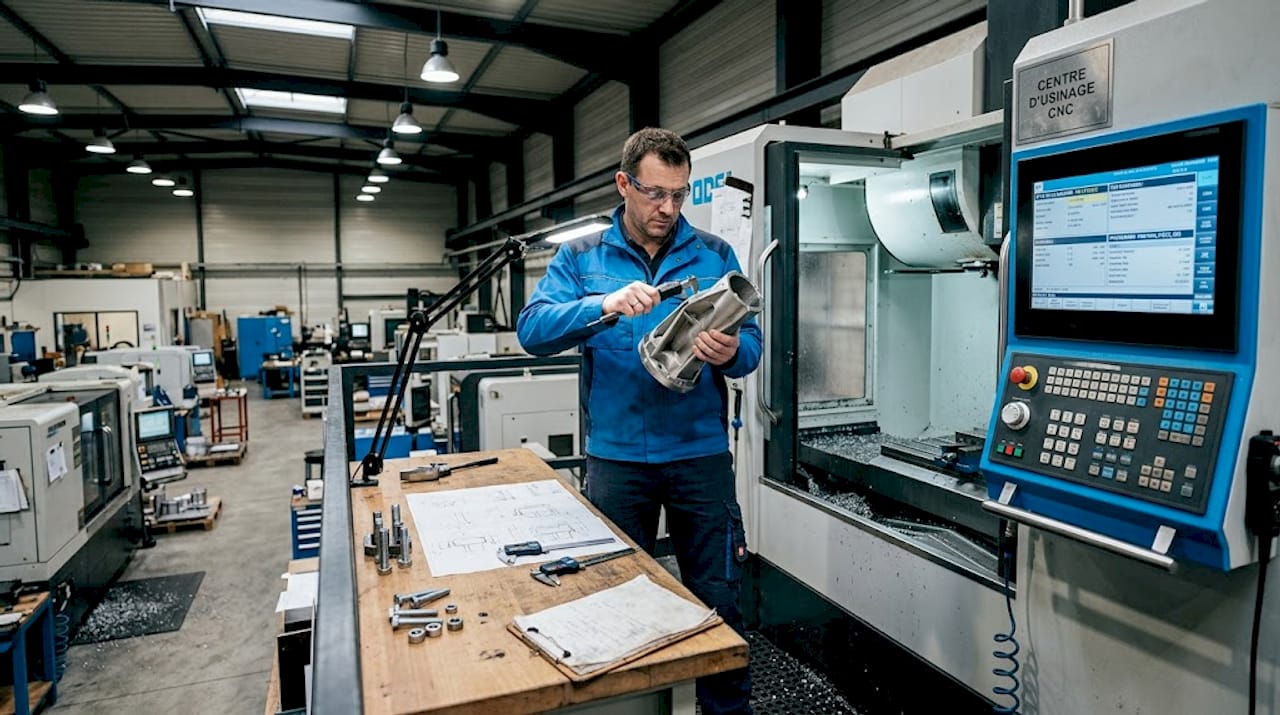
Hybrid manufacturing combines 3D printing for initial shaping and CNC machining for final tolerances. This combination imposes meticulous management of material properties: control of thermal and metallurgical properties of printed parts, then anticipation of machining constraints.
Pro tip: In hybrid manufacturing, plan for printing allowances from the modeling phase. Insufficient allowance makes the part unusable after machining.
Digital Twins and Quality Control
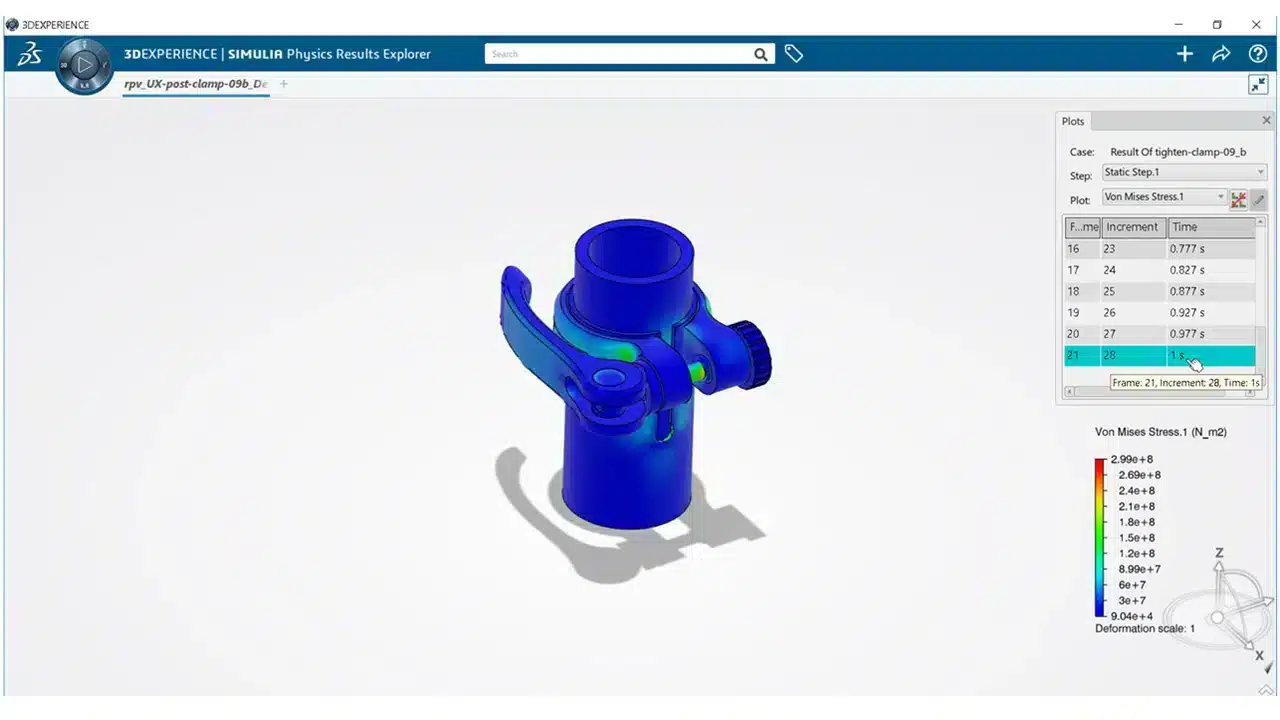
For LOD 400 to 500 projects, the 3D model becomes a digital twin: it reflects the actual state of the structure or machine with absolute precision. In the nuclear sector, a dimensionally compliant component can be rejected for incomplete documentation. 3D visualization of defects integrated into quality control software like DELMIA Apriso strengthens traceability and reduces late non-conformities.
5. Comparison of 3D Industrial Project Types by Sector
The following table presents the main characteristics of 3D projects according to sector and purpose.
| Project Type | Main Sector | Key Technology | Recommended LOD | Objective |
|---|---|---|---|---|
| Iterative Prototyping | Automotive, Electronics | 3D Printing, Parametric Modeling | LOD 200-300 | Validate a concept |
| Industrial Animation | All sectors | Animation, Kinematic Simulation | LOD 300 | Train and communicate |
| Hybrid Manufacturing | Aerospace, Mechanical | 3D Printing + CNC | LOD 400 | Produce final parts |
| Structural Lightweighting | Construction, Automotive | Numerical Calculation, Lattices | LOD 300-400 | Reduce weight and material |
| Digital Twin | Nuclear, Heavy Industry | 3D Scan, Advanced Modeling | LOD 500 | Monitoring and predictive maintenance |
To choose the right type of project, here are some practical recommendations:
- If your objective is product innovation, start with iterative prototyping with an LOD 200 to validate concepts quickly before investing in a detailed model.
- If you are targeting training or communication, industrial 3D animation offers the best return on investment.
- If your priority is the production of complex parts, hybrid manufacturing or lattice architectures are the approaches to consider.
- For regulated sectors (nuclear, medical), a digital twin with complete documentation is a requirement, not a choice.
The most common error remains underestimating the necessary level of detail. You can consult our guide on organizing your CAD files to structure your projects from the start.
My Perspective on 3D Industrial Project Trends
What strikes me most, observing the evolution of industrial 3D projects in recent years, is the distance separating teams that have truly integrated 3D into their process from those that still use it as an advanced visualization tool. 3D is no longer a presentation tool. It is a decision-making tool.
I have seen complex projects fail not for lack of technical skills, but for lack of consistency between the modeled level of detail and the expected final use. An LOD 300 model delivered for manufacturing use means weeks of rework. Defining the LOD upstream is not an administrative formality. It is the backbone of the project.
Regarding current trends, the acceleration is real. Industrial AI solutions now allow for operational workflow deployment 100 times faster, which concretely changes the tempo of projects. But this acceleration also creates a risk: going fast without a rigorous framework generates cascading errors.
My conviction is that the most successful industrial 3D projects in 2026 will be those that combine impeccable documentary rigor with true collaborative fluidity. The technology is there. The real lever is the method.
— Victor
Ohmycad Supports You in Your 3D Industrial Projects
At Ohmycad, we work every day with professionals and entrepreneurs who seek to structure their industrial 3D projects in an efficient and sustainable way. Whether you are starting iterative prototyping, preparing a hybrid manufacturing project, or wishing to implement a digital twin, we offer you the appropriate tools and support.
The 3DEXPERIENCE platform centralizes collaborative management, parametric CAD, and simulation in a secure cloud environment, ideal for distributed teams or multi-disciplinary projects. Our Dassault Systèmes certified experts guide you from the choice of licenses to integration into your existing workflows. Contact us for a personalized demonstration or a quote adapted to your project.
FAQ
What are the main types of 3D industrial projects?
The main types include iterative prototyping, industrial animation, hybrid manufacturing (3D printing + CNC), structural lightweighting through lattices, and digital twins. Each type meets distinct objectives and levels of detail.
What software should be used for a complex industrial 3D project?
CATIA and the 3DEXPERIENCE platform from Dassault Systèmes are the benchmarks for complex projects requiring simulation, collaborative management, and high LOD. SOLIDWORKS is more suitable for prototyping and modeling projects for SMEs.
How to choose the right level of detail for a 3D project?
LOD 200 is suitable for preliminary design, LOD 300 for execution, and LOD 400 to 500 for the digital twin or as-built documentation. Defining this level at the start of the project avoids costly rework during implementation.
Is 3D animation reserved for commercial communication?
No. Industrial 3D animation also covers technical training, assembly simulation, and design review. It is used internally as much as externally to facilitate the understanding of complex mechanisms.
Why is documentation critical in heavy industrial projects?
In sectors like nuclear, a dimensionally compliant component can be rejected if the associated documentation is incomplete. Documentary traceability is a regulatory requirement, not an optional extra.